

If you’re considering orthodontic treatment in Fresno for yourself or your child, you may be wondering whether traditional braces or Invisalign® is the better choice. Both treatment options can help straighten teeth, improve alignment, and create a healthier-looking smile. However, they work differently, and each has benefits depending on your needs.
At Unique Orthodontics, we offer several orthodontic treatment options, including traditional braces, clear braces, and Invisalign®. Understanding how these options compare can help you feel more confident when discussing treatment with an orthodontist.
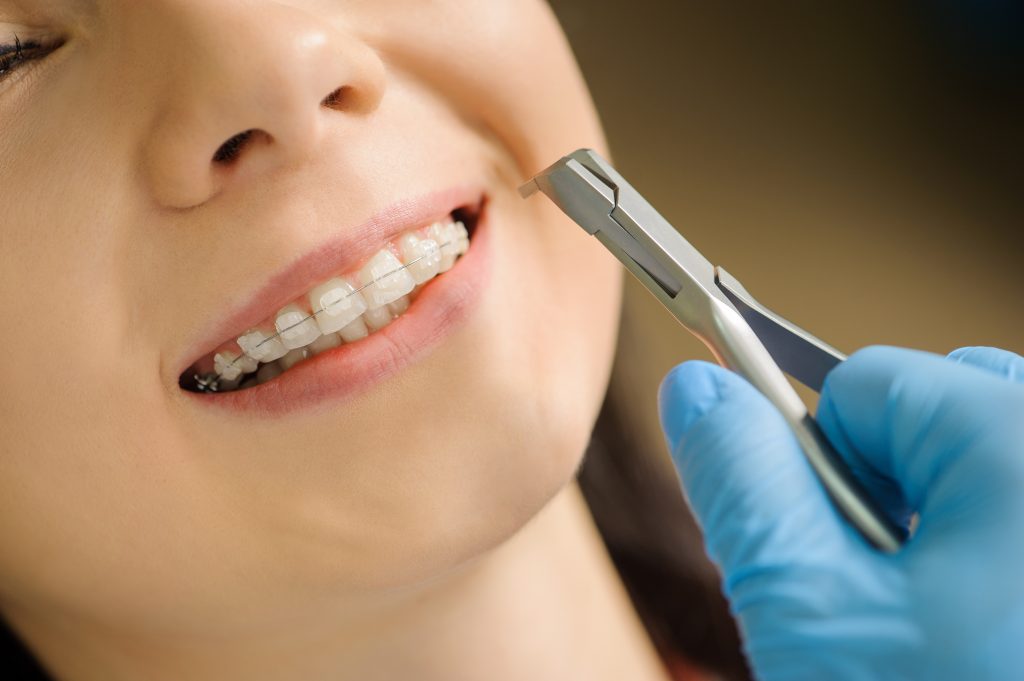
How Do Traditional Braces Work?
Traditional braces use brackets and wires to gradually move teeth into their desired positions. Small brackets are attached to the teeth and connected by an orthodontic wire. Your orthodontist periodically adjusts the braces to guide your teeth throughout treatment.
Braces can address a variety of orthodontic concerns, including:
- Crowded or crooked teeth
- Gaps and spacing between teeth
- Overbites and underbites
- Crossbites
- Certain complex tooth alignment and bite concerns
One of the biggest advantages of braces is that they remain attached to your teeth throughout treatment. You don’t have to remember to put them in or take them out, making them a practical option for patients who may have difficulty keeping up with removable aligners.
Traditional metal braces are also not the only option. Clear ceramic braces offer a less noticeable alternative while using a similar bracket-and-wire system.
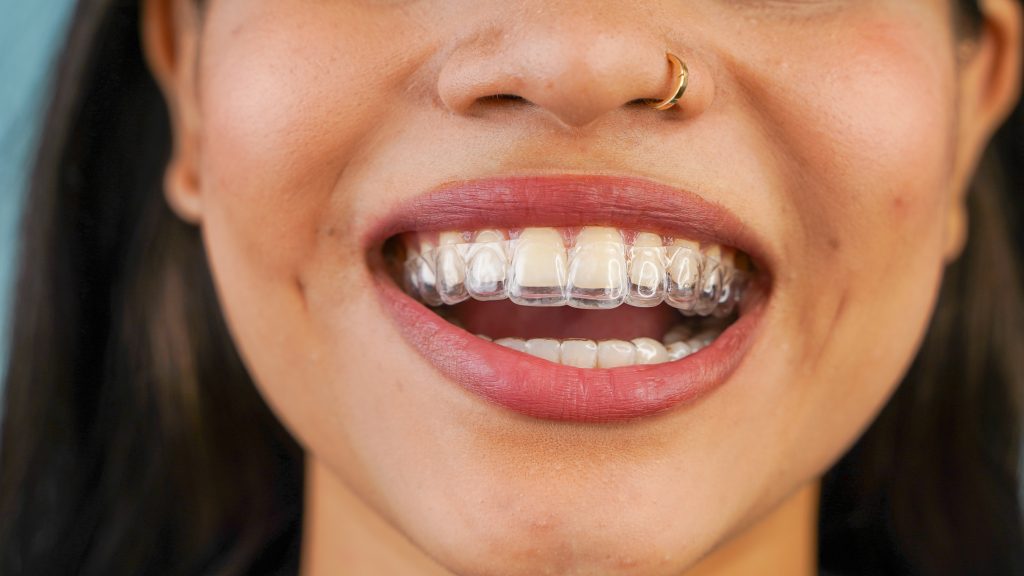
How Does Invisalign® Work?
Invisalign® uses a series of custom-made, clear plastic aligners to gradually move your teeth. Each set is designed to make small adjustments, bringing your teeth closer to their planned positions over time.
Unlike braces, Invisalign® aligners are removable. You can take them out when eating, drinking anything other than water, brushing, and flossing.
Some benefits of Invisalign® include:
- Discreet appearance: Clear aligners are less noticeable than traditional metal braces.
- Removability: You can remove your aligners for meals and your regular oral hygiene routine.
- No brackets or wires: There are no traditional brackets or wires that can cause irritation.
- Easier brushing and flossing: You can clean your teeth normally after removing your aligners.
For Invisalign® to work as planned, aligners generally need to be worn for 20–22 hours each day. They should only be removed when necessary, such as for eating, drinking anything other than water, and cleaning your teeth.
Because Invisalign® depends on consistent wear, it may not be the best option for everyone, especially younger patients who may have difficulty following the daily routine.
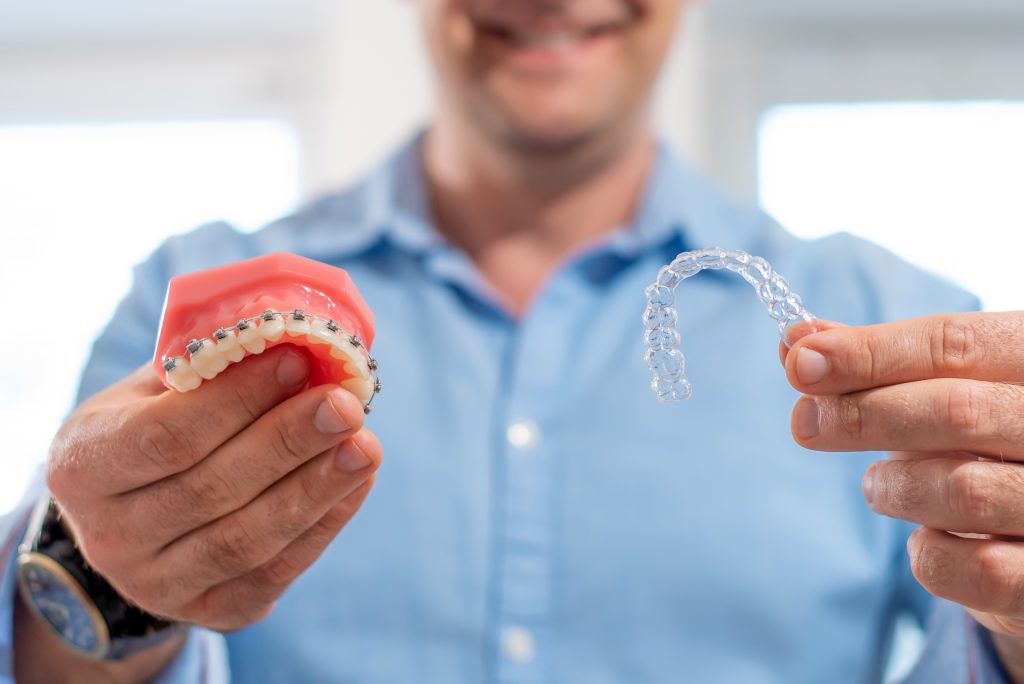
Braces vs. Invisalign®: What’s the Difference?
Both braces and Invisalign® can produce excellent orthodontic results when used for the right cases. The main differences involve appearance, maintenance, and how treatment is managed.
| Feature | Traditional Braces | Invisalign® |
|---|---|---|
| Appearance | Visible brackets and wires | Clear, less noticeable aligners |
| Removable | No | Yes |
| Eating | Avoid certain hard or sticky foods | Remove aligners before eating |
| Oral hygiene | Requires extra care around brackets and wires | Remove aligners to brush and floss |
| Daily commitment | Remain attached throughout treatment | Wear 20–22 hours per day |
| Adjustments | Periodic orthodontic appointments | Progress through a series of aligners with orthodontic monitoring |
Neither option is automatically better. Your orthodontist will consider your teeth, bite, treatment goals, and ability to follow the recommended treatment plan before making a recommendation.
Is Invisalign® as Effective as Traditional Braces?
Invisalign® can be an effective treatment for many mild to moderate orthodontic concerns, including crowding, spacing, and certain bite problems.
Traditional braces may be recommended for more complex tooth movements or bite concerns. They also give orthodontists consistent control over tooth movement without relying on the patient to remember to wear removable appliances.
However, treatment suitability is different for every patient. Some orthodontic concerns can be treated with either option, while others may require a specific approach.
The best way to determine whether Invisalign® or braces can meet your goals is to have your teeth and bite evaluated by an orthodontist.
Which Option Is Better for Teens and Adults?
Age, lifestyle, and orthodontic needs can all influence which treatment option makes the most sense.
For teens: Both braces and Invisalign® may be appropriate, depending on the patient’s development and ability to wear aligners consistently. Traditional braces can be a convenient choice for teens who don’t want the responsibility of keeping track of removable aligners.
For adults: Invisalign® is popular among adults who prefer a more discreet treatment option. However, traditional metal and clear ceramic braces can also be effective choices for adults who want to improve their smile.
Ultimately, the decision should be based on your orthodontic needs rather than age alone.
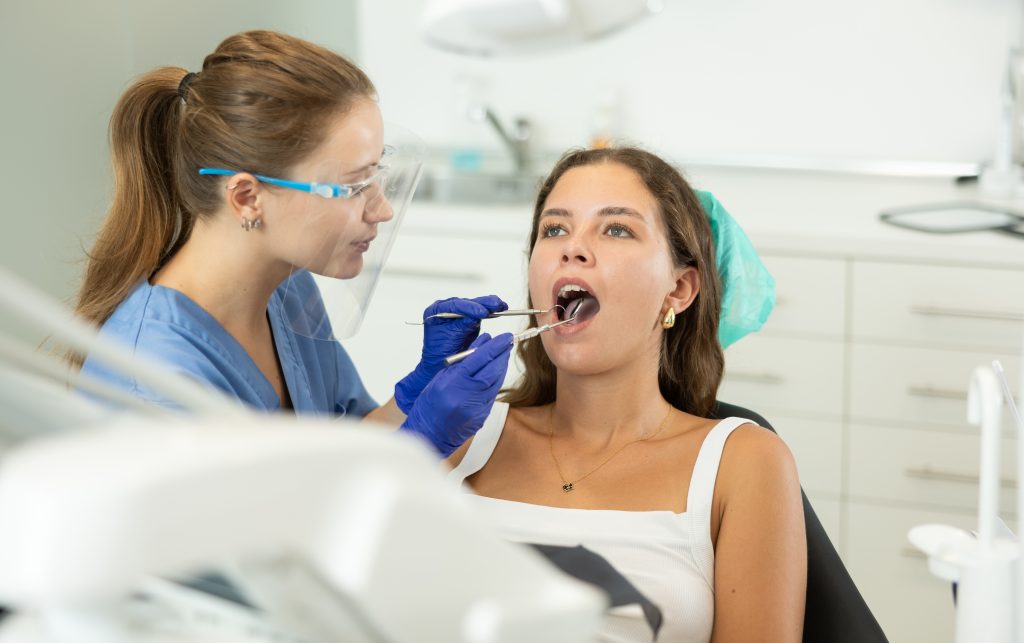
Find Out Which Treatment Is Right for You at Unique Orthodontics
Not sure whether braces or Invisalign® is the right choice? The team at Unique Orthodontics can help you explore your options and find an approach that fits your smile and treatment goals.
We offer complimentary orthodontic consultations, so you can learn more about your options without needing a referral.
Unique Orthodontics proudly serves Fresno and surrounding Central Valley communities, with offices in Fresno, Clovis, Madera, Merced, Visalia, Hanford, and Tulare.
Ready to take the next step? Schedule your complimentary consultation and discover which orthodontic treatment may be right for you!
Frequently Asked Questions
Is Invisalign® better than braces?
Neither treatment is universally better. Invisalign® offers removable, discreet aligners, while braces remain attached to the teeth and can be a better fit for certain complex orthodontic concerns. The right choice depends on your individual needs.
Is Invisalign® faster than traditional braces?
Not necessarily. Treatment time varies based on the complexity of your orthodontic concerns, how your teeth respond, and how consistently you follow your treatment plan. Invisalign® is not automatically faster than braces.
Can Invisalign® fix an overbite?
Invisalign® can correct certain types of overbites, but not every case is suitable for clear aligners. An orthodontist can evaluate your bite and determine which treatment approach is appropriate.
Can I switch from braces to Invisalign®?
In some situations, patients may be able to transition from braces to clear aligners. However, this depends on treatment progress, remaining tooth movements, and whether aligners can achieve the desired results.
How many hours a day should I wear Invisalign®?
Most patients should wear Invisalign® aligners for 20–22 hours per day. Wearing them less than recommended can affect treatment progress and results.
Are clear braces the same as Invisalign®?
No. Clear ceramic braces use tooth-colored or translucent brackets attached to the teeth, while Invisalign® uses removable plastic aligners. Both offer a less noticeable alternative to traditional metal braces, but they work differently.