

If you’re considering orthodontic treatment, one of the first decisions you may face is whether to choose traditional braces or Invisalign® clear aligners.
Both options can help straighten teeth, improve alignment, and address certain bite concerns. However, they work differently and offer different benefits depending on your lifestyle and orthodontic needs.
At Unique Orthodontics, we offer several treatment options for children, teens, and adults. Here’s a closer look at the differences between braces and Invisalign to help you understand which option may be right for your smile.
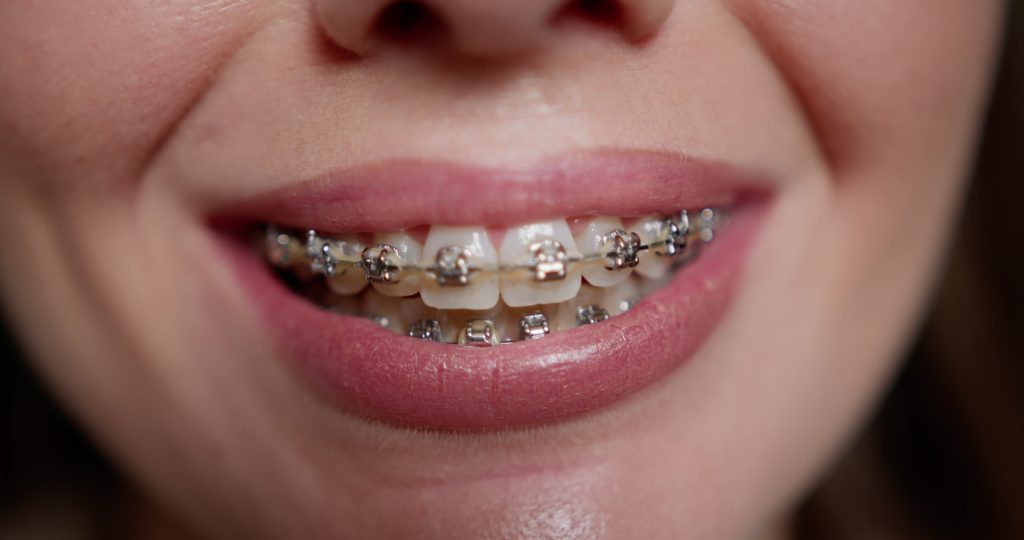
How Do Traditional Braces Work?
Traditional braces use a system of brackets and wires to gradually move your teeth into their planned positions.
Small brackets are attached to the surface of your teeth, and an archwire connects them to guide tooth movement throughout treatment. Your orthodontist will periodically adjust the braces to help your teeth progress according to your treatment plan.
Because braces are fixed to your teeth, they remain in place throughout the day and don’t require you to remember to put them back in after meals.
Types of Braces Available
There are several types of braces to consider:
- Traditional metal braces: Use metal brackets and wires to address a wide range of orthodontic concerns.
- Clear ceramic braces: Feature tooth-colored or clear brackets that blend more naturally with your smile.
- Damon braces: Use a self-ligating bracket system with a built-in mechanism to hold the archwire in place. They are available in metal and clear options.
Braces can be an effective option for many alignment and bite concerns, including cases that may require more complex tooth movements.
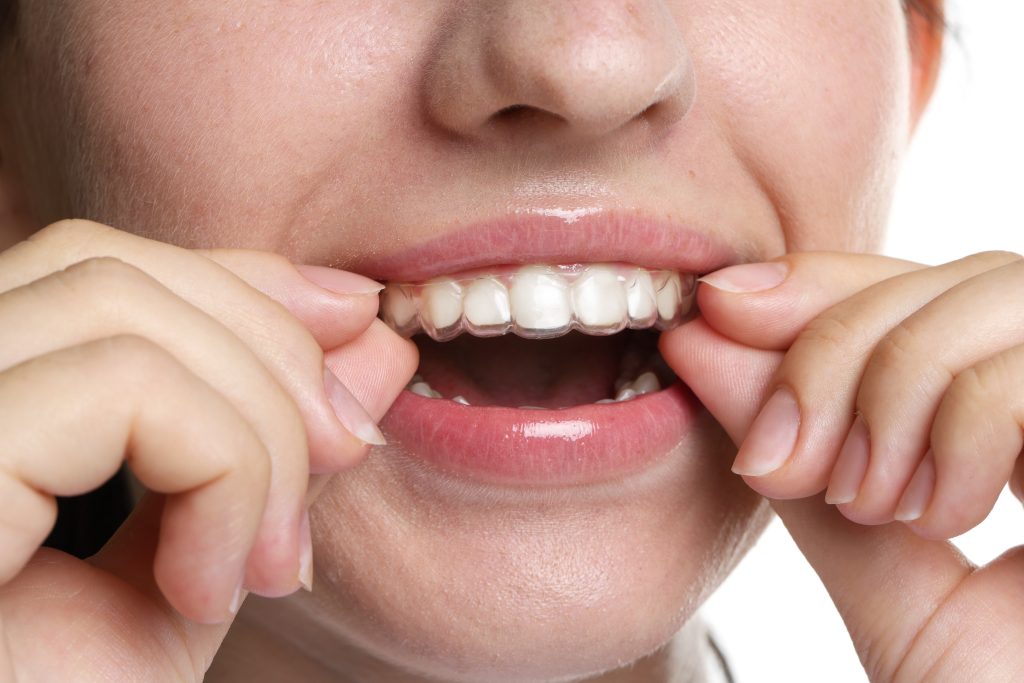
What Are Invisalign® Clear Aligners?
Invisalign is an orthodontic treatment that uses a series of custom-made, transparent plastic aligners to gradually move your teeth.
Each set of aligners is designed to make small adjustments to your tooth positions. As you progress through treatment, you’ll switch to new aligners according to your orthodontist’s instructions.
Unlike braces, Invisalign aligners are removable. Most patients need to wear them approximately 20–22 hours per day to keep treatment on track.
You’ll remove your aligners when eating, drinking anything other than water, and brushing or flossing your teeth.
Invisalign can address many orthodontic concerns, including certain cases of crowding, spacing, and bite misalignment. However, it isn’t appropriate for every patient.
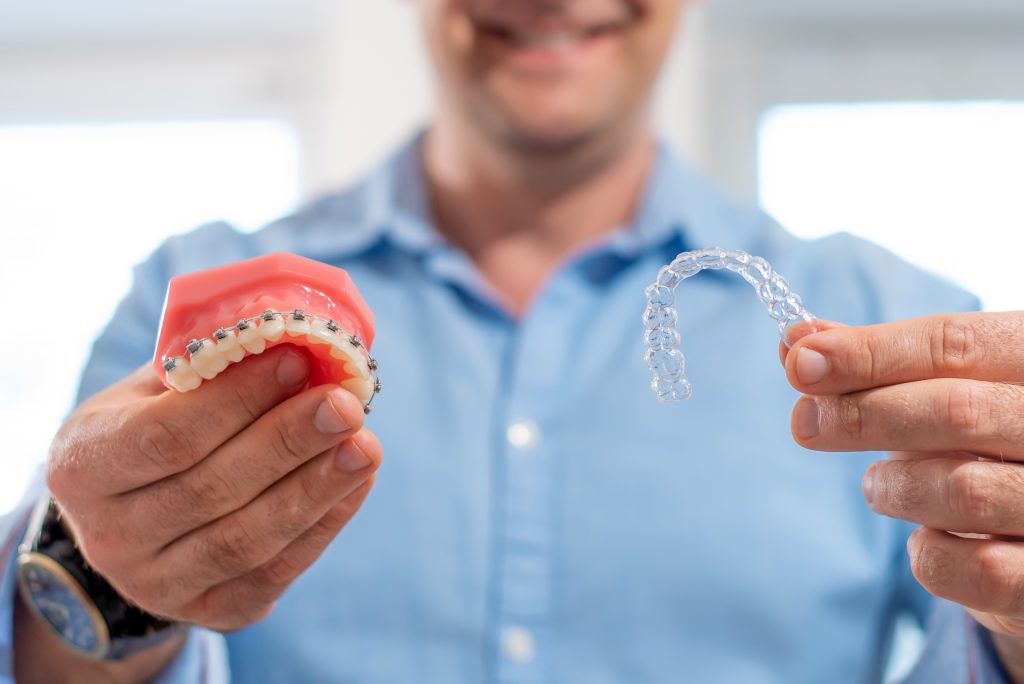
Braces vs. Invisalign: 5 Important Differences
Both treatment options can help you achieve a straighter smile, but there are some important differences to consider.
1. Appearance
If you’re concerned about how your orthodontic treatment will look, appearance may be an important factor.
Traditional metal braces use visible metal brackets and wires. Clear ceramic braces and Damon Clear offer less noticeable fixed options with tooth-colored or clear brackets.
Invisalign aligners are made from transparent plastic and fit closely over your teeth, making them a discreet option for patients who prefer a less noticeable treatment.
2. Removable vs. Fixed Treatment
One of the biggest differences between braces and Invisalign is whether you can remove your orthodontic appliances.
Braces remain attached to your teeth throughout treatment. Invisalign aligners can be removed for meals, brushing, and flossing.
This flexibility can be convenient, but it also requires consistency. Invisalign patients must wear their aligners approximately 20–22 hours each day.
With braces, you don’t have to worry about forgetting to put your orthodontic appliance back in after eating.
3. Eating and Oral Hygiene
Braces and Invisalign require different daily care routines.
With traditional braces:
- Avoid hard, sticky, and chewy foods that could damage brackets or wires.
- Brush carefully around brackets and wires.
- Floss daily using tools designed to help clean between teeth with braces.
With Invisalign:
- Remove aligners before eating.
- Drink plain water while wearing your aligners.
- Brush and floss before putting your aligners back in.
- Clean your aligners regularly according to your orthodontist’s instructions.
Both options require good oral hygiene habits throughout treatment.
4. Treatment Flexibility
Braces and Invisalign can both address a variety of orthodontic concerns, but they don’t work equally well for every situation.
Traditional braces may be recommended for certain complex tooth movements or bite concerns. Invisalign can also treat many types of alignment issues, depending on the patient’s individual needs and ability to follow the treatment plan.
Your orthodontist will evaluate your teeth and bite before recommending the most appropriate option.
5. Appointments and Treatment Progress
Both braces and Invisalign require regular orthodontic checkups to monitor your progress.
With braces, appointments allow your orthodontist to make adjustments and ensure your treatment is progressing as planned.
With Invisalign, appointments allow your orthodontist to monitor tooth movement, check aligner fit, and determine whether any changes to your treatment plan are needed.
Your appointment schedule will depend on your individual treatment plan.

Which Is Better: Braces or Invisalign?
There isn’t one option that’s best for everyone. The right treatment depends on your orthodontic needs, lifestyle, and personal preferences.
Braces may be a good fit if you:
- Have more complex alignment or bite concerns.
- Prefer a fixed treatment option.
- Don’t want to worry about removing and wearing aligners throughout the day.
- Want to explore metal, clear ceramic, or Damon braces.
Invisalign may be a good fit if you:
- Prefer a more discreet orthodontic option.
- Want to remove your aligners for meals and brushing.
- Can consistently wear your aligners as directed.
- Have orthodontic concerns that can be treated effectively with clear aligners.
An orthodontic consultation can help you compare your options and understand which approach is best for your smile.
Explore Braces and Invisalign at Unique Orthodontics
Choosing between braces and Invisalign doesn’t have to be overwhelming. At Unique Orthodontics, we offer several orthodontic treatment options to help children, teens, and adults achieve healthier, more confident smiles.
Whether you’re interested in traditional metal braces, clear ceramic braces, Damon braces, or Invisalign, our team can help you understand your options and find a treatment approach that fits your needs.
With eight convenient office locations throughout the Central Valley, getting started is easy.
Ready to find out which option is right for you? Schedule your complimentary consultation with Unique Orthodontics today!
Frequently Asked Questions About Braces vs. Invisalign
Are braces more effective than Invisalign?
Neither option is automatically more effective for every patient. Braces may be better suited for certain complex orthodontic concerns, while Invisalign can successfully treat many alignment and bite issues. Your orthodontist can determine which option is appropriate for your case.
Is Invisalign faster than braces?
Not necessarily. Treatment time depends on the complexity of your orthodontic needs, the treatment approach, and how consistently you follow your orthodontist’s instructions.
Does Invisalign hurt more than braces?
Both options can cause temporary pressure or soreness as your teeth move. Invisalign patients may notice pressure when switching to a new set of aligners, while braces patients may experience soreness after adjustments.
Can I eat whatever I want with Invisalign?
You can remove Invisalign aligners when eating, so you don’t have the same food restrictions associated with braces. However, you should brush your teeth before putting your aligners back in and avoid drinking anything other than plain water while wearing them.
Can Invisalign fix an overbite or underbite?
Invisalign can address certain overbite and underbite concerns, depending on their severity and underlying cause. Some cases may be better treated with braces or a combination of orthodontic approaches.
Do braces or Invisalign require retainers afterward?
Yes! Retainers are important after both braces and Invisalign treatment. Teeth can naturally shift over time, and wearing your retainers as directed helps maintain your results.